your job is not designing.it's perception design.
Updated: Sep 7
why the world's biggest brands don't just play the game well. they make you feel something before the game even starts.
early in my career, i wasn't thinking about any of this. i was just designing. then came the revisions. and more revisions. and one day i understood why: i was delivering good work inside a bad frame.
your job isn't just designing. it's perception design. and the moment i understood that, everything changed.
WHAT IS PERCEPTION DESIGN?
perception design is the intentional construction of how your work is received before it's evaluated. it's not about decoration. it's about context, atmosphere, and the emotional state you put someone in before they see anything.
this isn't a new idea. the most successful organizations in the world figured it out long before any of us did.
what is perception design in branding?
perception design is the practice of intentionally shaping how an audience receives and feels about your work before they consciously evaluate it. it includes presentation, context, atmosphere, tone, and every touchpoint that surrounds the actual product or service.

THE NBA AND PREMIER LEAGUE DIDN'T JUST PLAY BETTER
the last dance didn't teach you new things about michael jordan. you already knew he was good. what it did was make you feel what it was like to be in the room with him. the basketball didn't change. the presentation of the basketball changed. and suddenly, the whole world was watching.
same with the premier league. 22 players, one ball, one pitch. identical to every other football league on earth. but they built a logo, a sound, a visual language, a ritual. before every match, the atmosphere tells you: something important is about to happen.
that feeling is designed. it didn't come from the game. it was built around the game.
nba and premier league understood the mission. good game matters. but without good presentation, neither would be where they are today. their logos, broadcast quality, social media presence, badge and number systems, all of it serves one purpose: to tell you this is worth your attention.

HOW DOES THIS APPLY TO FREELANCE DESIGNERS?
for months, i was making good work and presenting it like it was nothing. i'd spend two weeks on a brand identity and send it as a jpeg. no context. no story. no atmosphere. just: here it is.
the client couldn't see the vision. not because the vision wasn't there. because i hadn't built the frame around it.
a painting without a frame, in a room with no lighting, on a wall with no context, is just paint.
it doesn't matter if you are the best designer in the world. if you don't show your work well, you are not getting clients. a good website, a strong social presence, maybe a youtube channel or a content series. an onboarding set: portfolio, cv, brand proposals, moodboard presentations, naming process decks, questionnaires. onboarding isn't a process. it's a first impression. and first impressions are everything.
how should a freelance designer present their work to clients?
present work on video calls rather than sending files. walk the client through your thinking, your decisions, and the story behind each direction. present directions, not options. a direction carries a point of view. an option just asks the client to pick. one invites conversation, the other creates revisions.
STOP DELIVERING WORK. DESIGN THE EXPERIENCE OF RECEIVING IT.
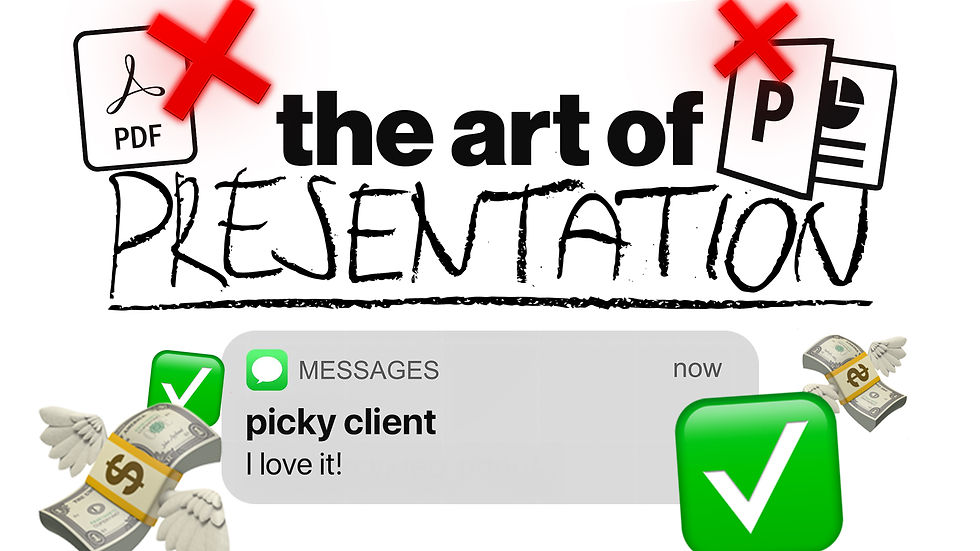
i made a decision. i stopped delivering work and started designing the experience of receiving work. present on video calls. no one reads anymore. don't make the client parse a pdf alone at midnight. tell the process yourself. explain every decision.
PRESENT DIRECTIONS, NOT OPTIONS
when i present progress, i don't show options. i present directions. "this direction says something bold. this direction says something quiet. which world does your brand want to live in?" that's not a revision. that's a conversation. and conversations build trust. file dumps create confusion.
MAKE EVERY DECISION SPEAKABLE
presentations are not about decorating. every design decision i make has a sentence behind it. why this typeface. why this weight. why this spacing. not to justify myself. to invite the client into my thinking. when they understand why, they stop asking what.
why do designers get too many revisions?
most revision cycles happen because the client was never invited into the thinking behind the work. when a designer presents without context, the client fills the silence with their own assumptions. explaining your decisions before they question them turns a review into a dialogue and significantly reduces back-and-forth.
WHAT PEOPLE REMEMBER IS NOT YOUR WORK
people can forget your work. even i forgot some of my early designs. logos get updated. brands evolve. campaigns end.
but people don't forget how you made them feel in the room. you don't have to be the best designer in the world. learn the best way to present your work. the real art of presentation isn't the slides, the mockups, or the animations. it's the feeling you leave behind after the screen goes dark.
good design speaks. great presentation makes people listen.
i go deeper on all of this in the latest youtube video. the nba comparison, the onboarding system i use with every client, and exactly how i structure a presentation call.


Comments